
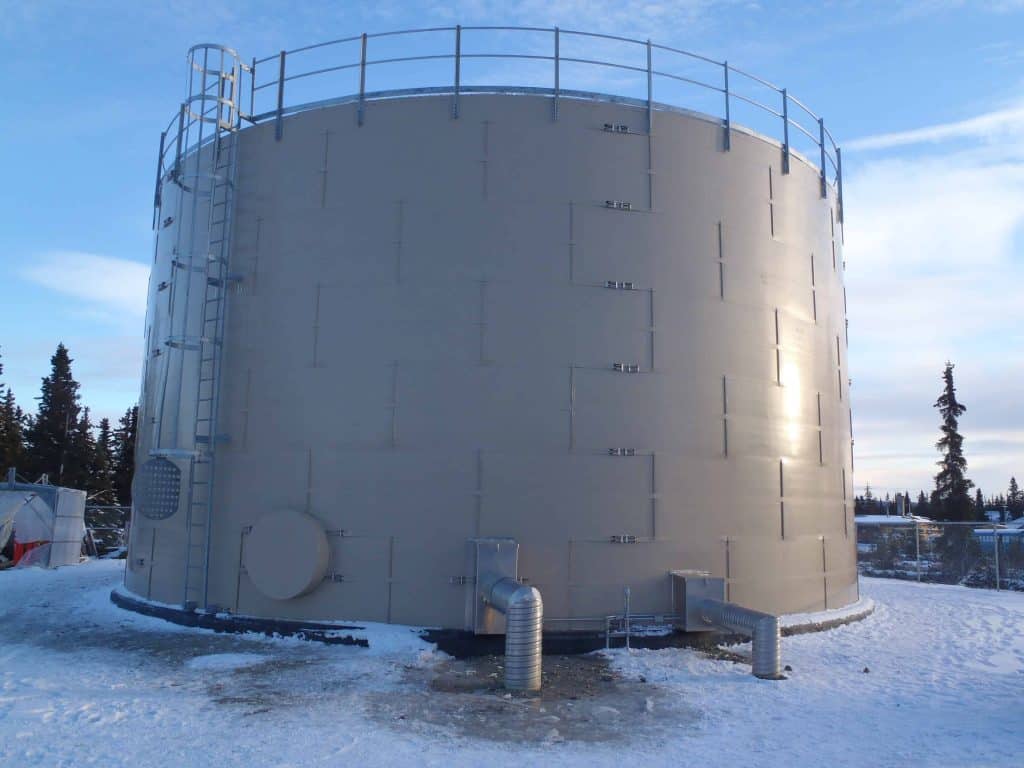
If you’re managing storage tanks that hold anything temperature-sensitive, you already know what’s at stake. Product integrity. Energy costs. Safety compliance. Equipment lifespan. One system addresses all of it: proper tank insulation.
But not all insulation is created equal. The wrong material, poor installation, or outdated systems can cost you more than just money. They can lead to product loss, regulatory headaches, and unexpected downtime.
This guide walks you through what industrial tank insulation actually does, how different systems compare, and what you need to know before making a decision. Let’s start with the basics.
What Is Industrial Tank Insulation and Why Does It Matter
Industrial tank insulation is a thermal barrier applied to storage tanks to control heat transfer between what’s inside and the environment outside. It’s used across industries where temperature consistency matters: petrochemical facilities, food and beverage operations, pharmaceutical manufacturing, wastewater treatment, and fire protection systems.
The goal is simple. Keep hot materials hot. Keep cold materials cold. Prevent energy from escaping. Protect the tank structure itself from temperature-related damage.
Without insulation, tanks lose heat constantly. That means your heating or cooling systems work harder. Energy bills climb. Products degrade. Condensation forms and leads to corrosion. In some cases, materials solidify or become unusable. Proper insulation stops that cycle.
How Tank Insulation Systems Actually Work
Tank insulation works by slowing two types of heat transfer: conduction and radiation. Conduction happens when heat moves through the tank wall from a warmer area to a cooler one. Radiation occurs when heat escapes as infrared energy into the surrounding air.
Insulation materials have low thermal conductivity, meaning they resist heat flow. When you wrap a tank in insulation, you’re creating a buffer that keeps internal temperatures stable without forcing your heating or cooling equipment to run nonstop.
Most systems consist of three main components. First, the insulation material itself, which could be foam, mineral wool, fiberglass, or cellular glass. Each has different thermal properties, moisture resistance, and temperature ranges. Second, a vapor barrier that prevents moisture from penetrating the insulation and causing corrosion. Third, an outer jacket or cladding that protects the insulation from physical damage, weather, and UV exposure.
The effectiveness of a system depends on how well these components work together. A high-quality insulation material won’t help much if moisture gets trapped inside. That’s why proper design and installation matter just as much as material selection.
Temperature control is the most obvious benefit, but it’s not the only one. Insulation reduces what’s called “breathing loss,” which happens when temperature fluctuations cause vapors inside the tank to expand and contract. That leads to product evaporation and waste. Insulation minimizes those swings, which means you lose less product and spend less replacing it.
Energy savings add up fast. An uninsulated tank operating at even moderate temperatures can waste thousands of dollars annually in lost heat. Insulated tanks use significantly less energy to maintain set temperatures. In many cases, the insulation system pays for itself within six to twelve months through reduced utility costs alone.
Then there’s equipment protection. Tanks exposed to extreme temperature changes or constant condensation are more prone to corrosion, especially in areas like Nassau County, NY, where weather conditions vary throughout the year. Insulation acts as a shield, extending the tank’s operational life and reducing the frequency of costly repairs or replacements.
Common Industries That Rely on Tank Insulation
Petrochemical and chemical storage facilities use insulation to maintain precise temperatures for volatile substances. Many chemicals require specific storage conditions to remain stable. If temperatures drop too low, some materials thicken or solidify. If they get too hot, you risk dangerous reactions or excessive evaporation.
Food and beverage operations depend on insulation for product quality and safety. Fermentation tanks, storage vessels for oils and syrups, and dairy processing equipment all need consistent temperatures. Temperature swings can ruin batches, trigger bacterial growth, or alter taste and texture.
Pharmaceutical manufacturers face strict regulatory requirements around temperature control. Active ingredients, vaccines, and other sensitive compounds must be stored within narrow temperature ranges. Insulation helps maintain those conditions while reducing the energy needed to do so.
Wastewater treatment plants use insulated tanks to prevent freezing in colder months and to support biological processes that require specific temperature ranges. Fire protection systems, particularly those storing water for emergency use, need insulation to prevent freezing and ensure the system functions when it’s needed most.
Thermal energy storage systems are designed specifically around insulation. These facilities store chilled or heated water during off-peak hours when energy costs are lower, then use that stored energy during peak demand. The entire concept relies on keeping stored temperatures stable for extended periods, which is impossible without high-performance insulation.
Cold storage applications present unique challenges. Tanks holding ammonia, butane, liquid nitrogen, or other cryogenic materials operate at extremely low temperatures. Standard insulation materials can’t handle those conditions. Specialized systems with advanced vapor barriers and closed-cell foam are required to prevent heat gain and maintain safe storage temperatures, sometimes as low as -50°F.
In Nassau County, NY, the industrial landscape includes a mix of these sectors. Manufacturing facilities, chemical processors, and wastewater treatment operations all face the same challenge: maintaining temperature control in a region where outdoor conditions fluctuate significantly between seasons. That makes choosing the right insulation system even more critical.
Types of Industrial Tank Insulation Systems and Materials
There are two main system designs: vertical standing seam panels and horizontal panel systems. Both are pre-engineered and custom-fitted to the tank’s dimensions, but they differ in installation method, durability, and maintenance requirements.
Vertical standing seam systems run the full height of the tank in panels that are mechanically joined to form weathertight seams. They’re secured using an internal cable and clip system, which means no welding or penetration of the tank wall. This allows installation while the tank remains operational.
Horizontal panel systems are stacked in rings around the tank, starting at the base and working up to the roof. Each panel is factory-curved to match the tank’s radius and held in place with external aluminum or stainless steel banding. These systems allow for expansion and contraction due to temperature changes, and individual panels can be removed for inspection or repair without dismantling the entire system.
Insulation Materials: What Works Best for Different Applications
Material selection depends on operating temperature, environmental conditions, and the specific risks your facility faces. There’s no universal “best” material. Each has strengths and limitations.
Polyisocyanurate foam, often called polyiso or PIR, is one of the most thermally efficient options available. It has a high R-value per inch, meaning it provides excellent insulation in a relatively thin layer. It’s lightweight, easy to install, and works well for both heated and cold storage applications within its temperature range. The downside is that it requires protection from moisture and mechanical damage, which is why it’s typically laminated to metal sheathing.
Mineral wool offers excellent fire resistance and can handle high-temperature applications up to 1200°F. It’s made from natural or synthetic fibers and retains its insulating properties even when exposed to moisture. It’s heavier and denser than foam, which can require additional structural support during installation, but it’s a solid choice for tanks operating at elevated temperatures or in environments where fire risk is a concern.
Fiberglass is affordable, lightweight, and provides good thermal resistance. It’s widely used across industries and easy to source. However, it can absorb moisture if not properly protected, and moisture-soaked fiberglass loses much of its insulating effectiveness. It also requires careful handling during installation to avoid skin irritation and airborne particles.
Cellular glass is completely nonabsorbent and impermeable to water, making it ideal for environments where moisture intrusion is a major concern. It’s also noncombustible and chemically inert, so it won’t contribute to corrosion or fire hazards. It’s often used for cryogenic applications and in areas where corrosive or flammable liquids are present. The trade-off is higher material cost and the need for precise installation to avoid breakage.
Closed-cell spray foam is applied directly to the tank surface, creating a seamless insulation layer that conforms to irregular shapes and hard-to-reach areas. It provides excellent thermal resistance and acts as its own vapor barrier. Installation requires specialized equipment and trained applicators, and it’s typically more expensive than panel systems. But for retrofit projects or tanks with complex geometries, it’s often the most practical solution.
Aerogel insulation is a newer option that offers outstanding thermal performance in an extremely thin profile. It’s used in space-constrained environments or where maximum efficiency is required. It’s lightweight, flexible, and can handle a wide temperature range. The main drawback is cost. Aerogel is significantly more expensive than traditional materials, so it’s usually reserved for specialized applications where other options won’t work.
Understanding Corrosion Under Insulation and How to Prevent It
Corrosion under insulation, commonly called CUI, is one of the most serious and expensive problems facing facilities with insulated tanks and piping. It occurs when moisture gets trapped between the insulation and the tank surface, creating an environment where corrosion can develop undetected.
The challenge with CUI is that it’s hidden. The insulation and outer cladding look intact from the outside, but underneath, the tank wall may be corroding, thinning, or developing pits that compromise structural integrity. By the time visible signs appear, significant damage has often already occurred.
CUI is most common in carbon steel tanks operating in temperature ranges between 25°F and 350°F. At these temperatures, moisture that enters the insulation doesn’t evaporate quickly, so it sits against the tank surface. If that moisture contains chlorides, sulfates, or other contaminants, corrosion accelerates.
Moisture can enter the system in several ways. Damaged or improperly sealed insulation jackets allow rainwater to penetrate. Condensation forms when tanks cycle between hot and cold temperatures. Steam leaks, washdowns, and even high humidity can introduce water into the insulation. Once inside, the insulation acts like a sponge, holding moisture against the tank surface for extended periods.
Preventing CUI starts with proper material selection. Closed-cell insulation materials, like cellular glass or certain foam products, resist moisture absorption better than open-cell materials like fiberglass or mineral wool. Vapor barriers are critical. They need to be installed correctly, with all seams sealed and penetrations properly flashed.
Design also plays a role. Insulation systems should be designed to shed water, not trap it. That means proper drainage, adequate flashing at joints and penetrations, and avoiding horizontal surfaces where water can pool. Weather barriers and outer cladding need to be durable and well-maintained. Even small cracks or gaps can allow water infiltration over time.
Regular inspection is essential. Facilities should have a CUI management program that includes visual checks, moisture detection, and periodic removal of insulation sections for direct inspection of the tank surface. Infrared thermography can identify wet spots in insulation before corrosion becomes severe. Ultrasonic testing measures wall thickness to detect metal loss.
For tanks in Nassau County, NY, where seasonal weather changes and humidity levels fluctuate, CUI risk is real. Facilities that store heated materials or operate tanks in temperature ranges prone to condensation need to be especially vigilant. The cost of a well-designed, properly maintained insulation system is far less than the cost of repairing or replacing a corroded tank.
Choosing the Right Tank Insulation System for Your Facility
Industrial tank insulation is more than an energy-saving measure. It protects your equipment, maintains product quality, supports regulatory compliance, and reduces long-term operational costs. The right system depends on your specific application, operating conditions, and facility environment.
Material selection, system design, and installation quality all matter. So does ongoing maintenance. Even the best insulation system won’t perform as intended if it’s not properly maintained and inspected over time.
If you’re evaluating insulation options for storage tanks in Nassau County, NY, or anywhere else, start by understanding your operating temperatures, environmental conditions, and specific risks like corrosion or moisture intrusion. Then work with experienced professionals who can design a system tailored to your needs.
We’ve been engineering and installing industrial tank insulation systems for over 40 years, serving facilities across multiple industries nationwide. Our team can help you assess your current setup, identify opportunities for improvement, and implement solutions that deliver measurable results.