
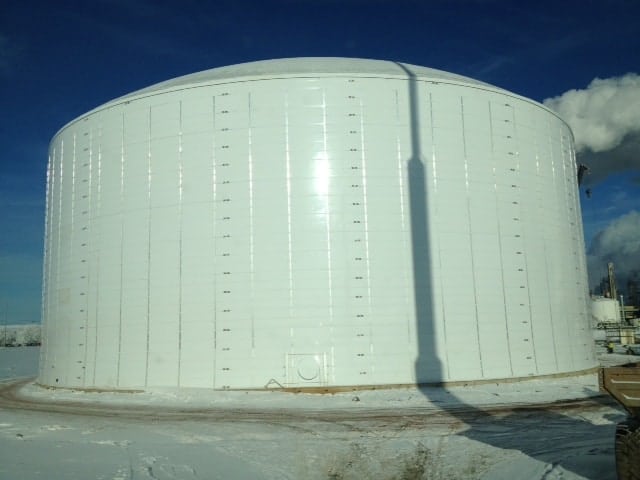
Your storage tank is losing money right now. Not from leaks you can see, but from heat bleeding through uninsulated walls, bases, and roofs—driving up your energy bills month after month while setting the stage for corrosion damage you won’t notice until it’s expensive.
The difference between an insulated and non-insulated tank isn’t subtle. It shows up in your utility costs, your maintenance schedule, and how often you’re dealing with product quality issues caused by temperature swings. This isn’t about making incremental improvements. It’s about understanding what’s actually costing you money and how the right insulation system changes the equation entirely.
How Much Energy Do Insulated Storage Tanks Actually Save
The numbers on energy savings aren’t hypothetical. When you insulate a storage tank properly, heat loss through the base alone drops by up to 90%. That’s not a small improvement—it’s the difference between constantly fighting to maintain temperature and letting your insulation do the work.
For context, even a modest-sized industrial tank—30 feet in diameter, 20 feet tall—with just one inch of quality insulation saves 388 BTUs per year with a 10-degree temperature difference. Double that temperature gap, and you’re saving 776 BTUs annually. Scale that across larger tanks or multiple units, and the energy waste from uninsulated systems becomes impossible to ignore.
Storage tank insulation typically pays for itself in six to eight months when operating at 165°F in outdoor conditions. After that payback window, every dollar saved goes straight to your bottom line for the entire lifespan of the tank.
Where Your Tank Loses the Most Heat Without Insulation
Most facility managers assume the sidewalls are where heat escapes. They’re not wrong, but they’re missing the bigger problem: the tank base.
Here’s what makes the base so vulnerable. Even when your storage tank sits at only 10% capacity, the bottom plate stays in 100% contact with the hot liquid inside. The sidewalls and roof? Their heat loss fluctuates as liquid levels rise and fall. But the base is always transferring heat into the ground beneath it, making it the most susceptible area for energy loss.
This constant contact creates a thermal drain that never stops. Without proper base insulation, you’re essentially heating the soil under your tank instead of maintaining your product temperature. And because this heat loss is hidden—literally underground—it’s easy to overlook until you see the energy bills.
Temperature loss doesn’t just waste energy. It compromises what’s inside the tank. A decrease in temperature can increase viscosity or even cause product solidification, interfering with material properties and creating operational headaches. For products like asphalt that need to stay between 280-350°F, or chemicals that require precise temperature control, this isn’t just inefficient—it’s a quality control problem.
The fix isn’t complicated, but it does require understanding that tank insulation isn’t just about wrapping the visible surfaces. A complete system addresses the base, sidewalls, and roof as a continuous thermal barrier. Miss one component, and you’re still losing energy and risking product integrity.
Real Cost Comparison: Insulated vs Non-Insulated Storage Tanks
Let’s put actual numbers to this. The average cost to insulate a storage tank runs about $10 per square foot. For a facility spending $10,000 on a complete insulation system, you’re looking at roughly $5,000 in annual energy savings. That’s a two-year payback, and many systems hit ROI even faster depending on operating temperatures and local energy rates.
Compare that to the alternative. An uninsulated tank forces your heating or cooling systems to work harder just to maintain set temperatures. Those systems aren’t just using more energy—they’re wearing out faster, driving up maintenance frequency and replacement costs. You’re paying more to run equipment that’s aging prematurely.
Then there’s the cost you don’t see coming: corrosion under insulation, or CUI. In the oil and gas sector, CUI accounts for 40-60% of piping maintenance costs. When moisture gets trapped between insulation and metal surfaces—or when there’s no insulation at all—corrosion starts eating away at your tank structure. The estimated cost of CUI-related issues can hit $84 million annually per facility when you factor in downtime at $220,000 per hour.
Non-insulated tanks also create temperature fluctuations that degrade stored products. If you’re storing chemicals, food products, or petroleum, inconsistent temperatures lead to spoilage, off-spec batches, and waste. That’s lost inventory you’ve already paid for, plus the cost of disposal and replacement.
Insulated storage tanks eliminate these compounding costs. The initial investment covers materials and installation, but what you’re really buying is predictable operating expenses, extended equipment life, and product quality you can count on. The ROI isn’t just about energy savings—it’s about avoiding the expensive surprises that uninsulated systems eventually deliver.
For facilities in Nassau County, NY, where weather conditions swing between harsh winters and humid summers, the thermal stress on uninsulated tanks accelerates wear and drives up costs even faster. Insulation isn’t optional in this climate—it’s the difference between managing costs and constantly reacting to problems.
How Tank Insulation Reduces Maintenance and Prevents Corrosion
Maintenance costs for storage tanks don’t stay predictable when corrosion is in the picture. And if your tanks aren’t properly insulated, corrosion isn’t a question of if—it’s when.
Corrosion under insulation happens when moisture gets trapped against metal surfaces. Temperature fluctuations cause condensation, and that moisture sits there, hidden beneath insulation or directly on bare metal, slowly degrading your tank structure. By the time you notice the damage, you’re looking at repairs that cost far more than prevention would have.
Proper insulation creates a barrier that controls temperature, which in turn prevents the condensation that leads to corrosion. Vertical standing seam panel systems, for example, use machine-formed double-locking seams that create watertight seals. Water can’t infiltrate, which means your tank shell stays dry and intact. That’s not just about avoiding rust—it’s about protecting the structural integrity of equipment that holds valuable or hazardous materials.
Why Corrosion Under Insulation Costs More Than You Think
CUI doesn’t announce itself. It develops out of sight, under layers of insulation or in areas where moisture accumulates without obvious signs. Most facilities only discover CUI during routine inspections—or worse, after a leak or failure forces them to strip insulation and assess the damage.
The financial impact goes beyond repair costs. When CUI compromises a tank, you’re facing unplanned downtime while the issue gets addressed. For industries where storage tanks are critical to operations—petrochemical, food processing, chemical manufacturing—that downtime translates to lost production, missed deadlines, and revenue that never materializes.
The maintenance burden is significant too. Facilities dealing with CUI spend 40-60% of their piping and tank maintenance budgets on corrosion-related issues. That’s money that could go toward upgrades, expansion, or simply improving margins—instead, it’s absorbed by reactive repairs that wouldn’t be necessary with proper insulation from the start.
Here’s what makes CUI particularly costly in Nassau County, NY. The region’s climate creates ideal conditions for moisture infiltration. Humid summers, freeze-thaw cycles in winter, and proximity to coastal salt air all accelerate corrosion. Without insulation designed to keep moisture out, your tanks are fighting a losing battle against environmental factors that never let up.
Preventing CUI isn’t complicated, but it does require insulation systems engineered for the job. Closed-cell foam insulation, for example, protects the steel base structure against condensation. Watertight sealing systems prevent water intrusion at joints and seams. And because modern insulation panels don’t require exposed screws or rivets, there are fewer penetration points where moisture can sneak in.
The maintenance benefits extend beyond corrosion prevention. Insulated tanks maintain stable temperatures, which reduces thermal stress on tank materials. Less stress means fewer micro-cracks, less expansion and contraction wear, and a longer service life overall. You’re not just avoiding corrosion—you’re reducing the cumulative wear that eventually forces costly replacements.
How Proper Insulation Extends Equipment Lifespan
Tank lifespan isn’t just about the quality of the steel or the initial construction. It’s about how well you protect that investment from the forces that degrade it over time—temperature fluctuations, moisture, and the relentless cycle of heating and cooling that stresses materials.
Insulated storage tanks experience less thermal cycling. When temperatures stay consistent, the metal doesn’t expand and contract as aggressively. That means fewer stress fractures, less fatigue on welds and seams, and a structure that holds up longer under operational demands.
Consider what happens to an uninsulated tank over a typical year in Nassau County, NY. Summer heat drives exterior temperatures up, while the contents inside may need to stay cool. Winter cold does the opposite. Each seasonal swing forces the tank through thermal expansion and contraction. Over years, that cycling weakens the structure, creates opportunities for leaks, and shortens the tank’s usable life.
Insulation dampens those swings. The tank operates in a more controlled thermal environment, which reduces mechanical stress. You’re not just maintaining temperature for the product inside—you’re protecting the tank itself from the wear that eventually leads to failure.
There’s also the matter of foundation protection. Tank base insulation doesn’t just prevent heat loss—it protects the concrete foundation from high temperatures that can cause cracking and degradation. When the foundation stays intact, the tank remains stable and properly supported. If the foundation fails, you’re looking at a much larger problem than just replacing insulation.
The long-term cost savings here are substantial. Extending a tank’s lifespan by even a few years delays a major capital expense. And because insulated tanks require less frequent maintenance, you’re reducing the labor and material costs associated with keeping equipment operational. It’s not glamorous, but it’s the kind of cost avoidance that makes a real difference to your operating budget.
Vertical insulation panels, specifically, don’t require ongoing maintenance and resist moisture intrusion better than horizontal systems. That’s one less thing to monitor, inspect, and repair over the life of the tank. The system does its job without constant intervention, which is exactly what you want from infrastructure that’s supposed to work reliably for decades.
Making the ROI Case for Insulated Storage Tanks
The case for insulating your storage tanks isn’t about theory—it’s about measurable outcomes that show up in energy bills, maintenance logs, and equipment longevity. Heat loss reductions of up to 90%. Payback periods as short as six to eight months. Corrosion prevention that saves 40-60% of typical maintenance costs. These aren’t projections—they’re results facilities see when insulation is done right.
For operations in Nassau County, NY, where climate conditions and regulatory requirements add pressure, proper tank insulation isn’t optional. It’s the difference between managing costs effectively and constantly reacting to problems that could have been prevented.
If you’re evaluating whether to insulate—or upgrade existing systems—the numbers make the decision straightforward. The upfront investment pays for itself quickly, and the long-term savings compound year after year. When you’re ready to see what that looks like for your specific operation, we have the engineering expertise and proven systems to deliver results that last.