Summary:
If you’re managing an industrial facility and you’ve started looking into insulation contractors, you’ve probably noticed something: most of what comes up is built for homeowners. Spray foam for attics. Blown-in for basements. Fiberglass batts for walls. Those services have their place — but if you’re dealing with a storage tank, a cold storage system, or a petrochemical vessel, you’re operating in a completely different category. The contractor who insulates a split-level home and the specialist who engineers a tank insulation system for an industrial facility aren’t solving the same problem. This page explains why that gap matters — and how to evaluate your options clearly.
Basement Insulation Installers and What They're Actually Built For
Basement insulation installers are specialists in their own right. They understand moisture control, below-grade thermal performance, vapor diffusion, and the specific demands of their climate zone, such as IECC Climate Zone 4A, a mixed-humid classification that means cold winters, hot summers, and enough humidity to cause real problems if insulation is installed wrong.
What they’re not built for is anything involving an industrial storage vessel. The materials, the engineering requirements, the compliance standards — they’re in a different universe. A basement installer works within enclosed building cavities. A tank insulation specialist works on the exterior of curved, pressurized, or temperature-controlled vessels that may be holding ammonia, petrochemicals, or fire suppression water. The skills don’t transfer, and neither does the equipment.
How Do General Contractors Handle Insulation Differently Than Specialists?
General contractors approach insulation as one line item among many. They source materials from third-party suppliers, adapt standard products to whatever the job requires, and rely on field improvisation when the application doesn’t fit the catalog. For a residential project, that’s usually fine. For an industrial tank, it’s where failures begin.
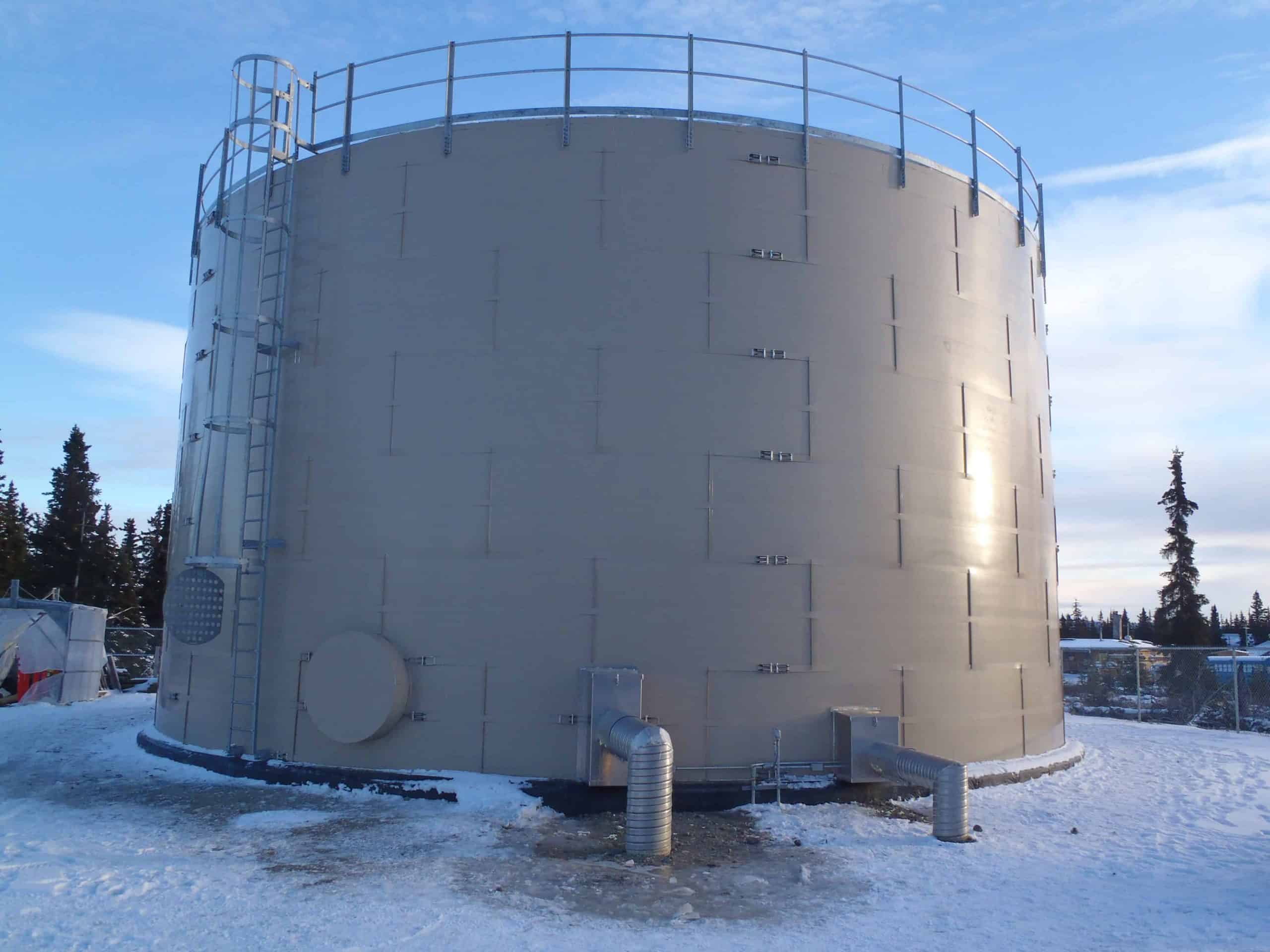
The difference shows up in the details. A general contractor installing insulation on a storage tank might use standard building roofing materials — products designed for flat or pitched building surfaces — and adapt them to a curved tank exterior. It works, in the sense that something gets installed. But it doesn’t account for the thermal expansion and contraction that industrial tanks experience, the wind loads that coastal and exposed facilities face, or the compliance requirements that regulated industries can’t ignore.
We’ve seen the results of that approach. Insulation that separates at the seams after a nor’easter. Systems that trap moisture against the tank wall because vapor barriers weren’t engineered for the application. Roofing materials that weren’t rated for the temperature range of the stored product. These aren’t hypothetical failure modes — they’re the reason industrial buyers eventually stop calling general contractors and start looking for someone who has spent decades doing only this.
Industrial facilities, from municipal water treatment plants to fuel and chemical storage operations, operate in an environment that demands more than a repurposed building product. Near the coast, salt air corrosion is a real design consideration. At coastal and open sites, wind exposure means a tank roofing system needs to be engineered for sustained high-wind conditions, not just rated for a standard residential load. These are factors that a general contractor’s catalog simply doesn’t address.
What Makes Industrial Tank Insulation a Separate Discipline?
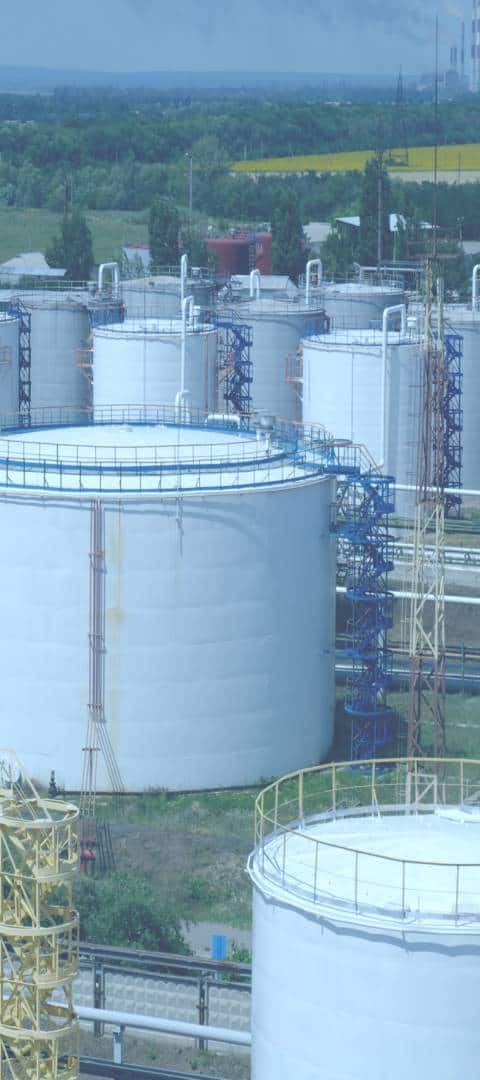
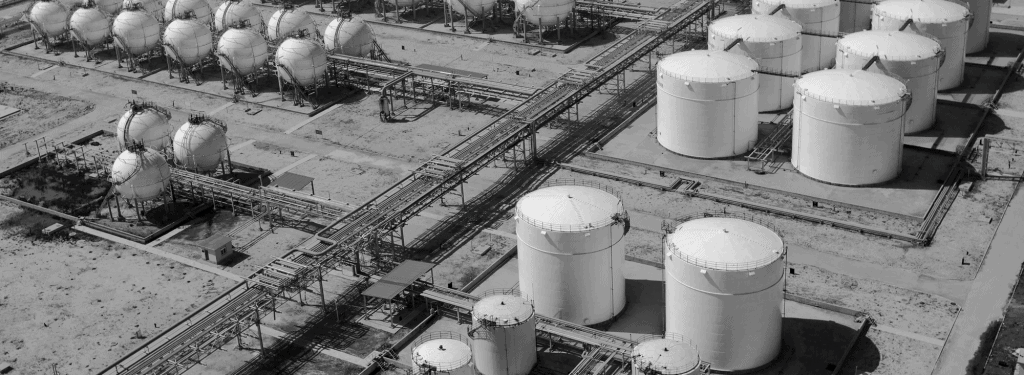
Industrial tank insulation requires a specific combination of materials engineering, structural design, and compliance knowledge that general insulation work doesn’t develop. The insulation system has to accommodate the geometry of the tank — curved sidewalls, specific roof profiles, bolted or welded construction — while also performing across a temperature range that can span from cryogenic cold storage at -50°F to high-temperature petrochemical applications at +500°F. That’s not a range you achieve with fiberglass batts or blown-in cellulose.
The structural side matters just as much. Storage tanks expand and contract with temperature changes. An insulation system that’s rigidly attached — welded to the tank surface, for example — will crack, separate, or compromise the tank’s integrity over time. The engineering solution is a system that moves with the tank, accommodating thermal cycling without breaking down. That requires pre-engineered components, not field-adapted materials.
Compliance is the third dimension. Fire protection water storage tanks are typically required to meet National Fire Protection Association Standard 22. Petrochemical tanks are subject to EPA regulations governing material compatibility. Industrial facilities handling hazardous substances operate under OSHA requirements that affect how and when insulation work can be performed. We maintain documented compliance with these standards and can provide the paperwork to prove it.
There’s also the operational question. Most industrial facilities can’t afford to take a storage tank offline for weeks while insulation is installed. The right system — one engineered with a tensioned band assembly rather than welded attachments — allows installation to proceed while the tank stays fully operational. That’s not a minor convenience. For a facility running continuous production, it’s the difference between an upgrade and a shutdown.
Blow-In Insulation Contractors and Foam Insulation Services: Where They Fit
Blow-in insulation contractors and foam insulation services cover a lot of ground in the residential and light commercial market. Blown-in cellulose and fiberglass are excellent for attic cavities and enclosed wall spaces — they’re cost-effective, widely available, and well-suited to the residential and light commercial work that dominates the local insulation market. Spray foam — open-cell and closed-cell — offers higher R-values per inch and is increasingly common in commercial applications.
These methods work well in the applications they were designed for. The limitation isn’t the material — it’s the application. Blown-in insulation requires an enclosed cavity to contain it. Spray foam, applied in the field, can’t achieve the geometric precision or uniform thickness that a pre-engineered panel system delivers on a curved tank surface. For industrial storage vessels, the method matters as much as the material.
Spray Foam vs. Pre-Engineered Panel Systems for Storage Tanks
Spray foam insulation has a legitimate place in commercial and industrial construction — but it has real limitations when applied to large-scale storage tanks. Field-applied foam can’t be controlled to the same tolerances as factory-manufactured panels. Thickness varies. Adhesion to curved metal surfaces is inconsistent. And once applied, the system is essentially permanent — difficult to inspect, difficult to repair, and impossible to adjust if the tank’s operating conditions change.
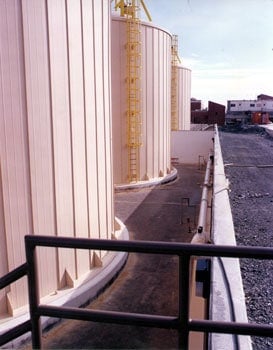
Pre-engineered panel systems, by contrast, are manufactured to the exact specifications of each tank before installation begins. Panels are factory-curved to match the tank’s radius. Insulation thickness is consistent throughout. The metal sheathing — aluminum, galvalume, or stainless steel depending on the application — is laminated at the factory, not improvised on-site. The result is a system that performs to specification from day one, rather than one that approximates the design intent.
For facilities dealing with coastal humidity and salt air, the quality of the metal sheathing isn’t a cosmetic consideration. Corrosion on a tank insulation system isn’t just an aesthetic problem — it compromises the thermal barrier, allows moisture infiltration, and can accelerate degradation of the tank surface itself. Factory-laminated aluminum sheathing with proper vapor barriers addresses this in a way that field-applied foam simply can’t.
The wind resistance question is equally important. In regions exposed to nor’easters, hurricanes and other severe storms, an insulation system on an outdoor storage tank needs to be engineered for sustained high-wind conditions. We engineer our tank roofing systems to withstand wind speeds up to 150 mph — a specification that comes from structural engineering, not from a product data sheet for residential spray foam.
Fiberglass Insulation Company Services vs. Advanced Tank Insulation Systems
Fiberglass remains the most widely recognized insulation material in the residential market, and for good reason — it’s affordable, widely available, and performs reliably in standard building applications. A fiberglass insulation company serving homeowners is doing exactly what the product was designed for. The issue arises when fiberglass-based approaches are applied to industrial tank systems where the performance requirements are fundamentally different.
Fiberglass insulation in batt or loose-fill form delivers R-values in the range of R-2.2 to R-2.7 per inch — adequate for building envelope applications, but insufficient for industrial tanks where temperature differentials can exceed 500 degrees and thermal efficiency directly affects product integrity and energy costs. Isocyanurate foam — the core material in our panel systems — delivers approximately R-6.5 per inch, more than double the thermal performance of fiberglass, in a system that’s engineered for outdoor industrial environments rather than interior building cavities.
The performance gap isn’t just about R-value. Fiberglass absorbs moisture. In a coastal or humid environment, where humidity is high and salt air is a constant factor, moisture absorption in an insulation system leads to degraded thermal performance, corrosion risk, and eventual system failure. Closed-cell isocyanurate foam, laminated to aluminum sheathing, resists moisture intrusion at a level that fiberglass cannot approach.
There’s also the question of what happens at the extremes. A fiberglass insulation company is equipped to handle the temperature ranges found in residential and light commercial construction — roughly 0°F to 120°F in real-world conditions. Our systems are engineered for applications ranging from -50°F cold storage tanks holding ammonia-based products to +500°F high-temperature industrial vessels. Those aren’t incremental improvements on standard insulation — they’re a different category of engineering entirely. For industrial operators, especially those in food processing, water treatment, or chemical storage, that range is the baseline requirement, not a premium feature.
Which Type of Insulation Contractor Do Industrial Facilities Actually Need?
For residential and light commercial projects, the local market is usually well served. There are capable contractors handling attic blow-in, basement insulation, spray foam, and fiberglass work in most areas. If that’s what you need, you have options.
If you’re managing an industrial storage tank — whether it holds fire suppression water, petrochemicals, cryogenic liquids, or anything in between — the calculus is different. The compliance requirements are stricter, the performance demands are more exacting, and the cost of a wrong choice isn’t just a redo. It’s downtime, regulatory exposure, and a system that has to come out before a better one can go in.
We’ve been building industrial tank insulation systems since 1971. Not insulation in general — tank insulation specifically, for facilities across the United States and internationally. If you’re evaluating your options for a storage tank project anywhere in the United States, we’re worth a conversation. Reach out to us directly to talk through what your project actually requires.