Summary:
Summer doesn’t ease up on industrial equipment. By the time July hits, temperatures are regularly pushing into the high 80s — and if your storage tanks and insulation systems aren’t in good shape heading into that heat, you’re going to feel it in your energy bills, your product quality, and eventually your compliance record. The good news is that most of the serious problems are preventable. They just require attention before the heat peaks, not after. Here’s what to focus on.
Industrial Equipment Maintenance Before Summer Heat Peaks
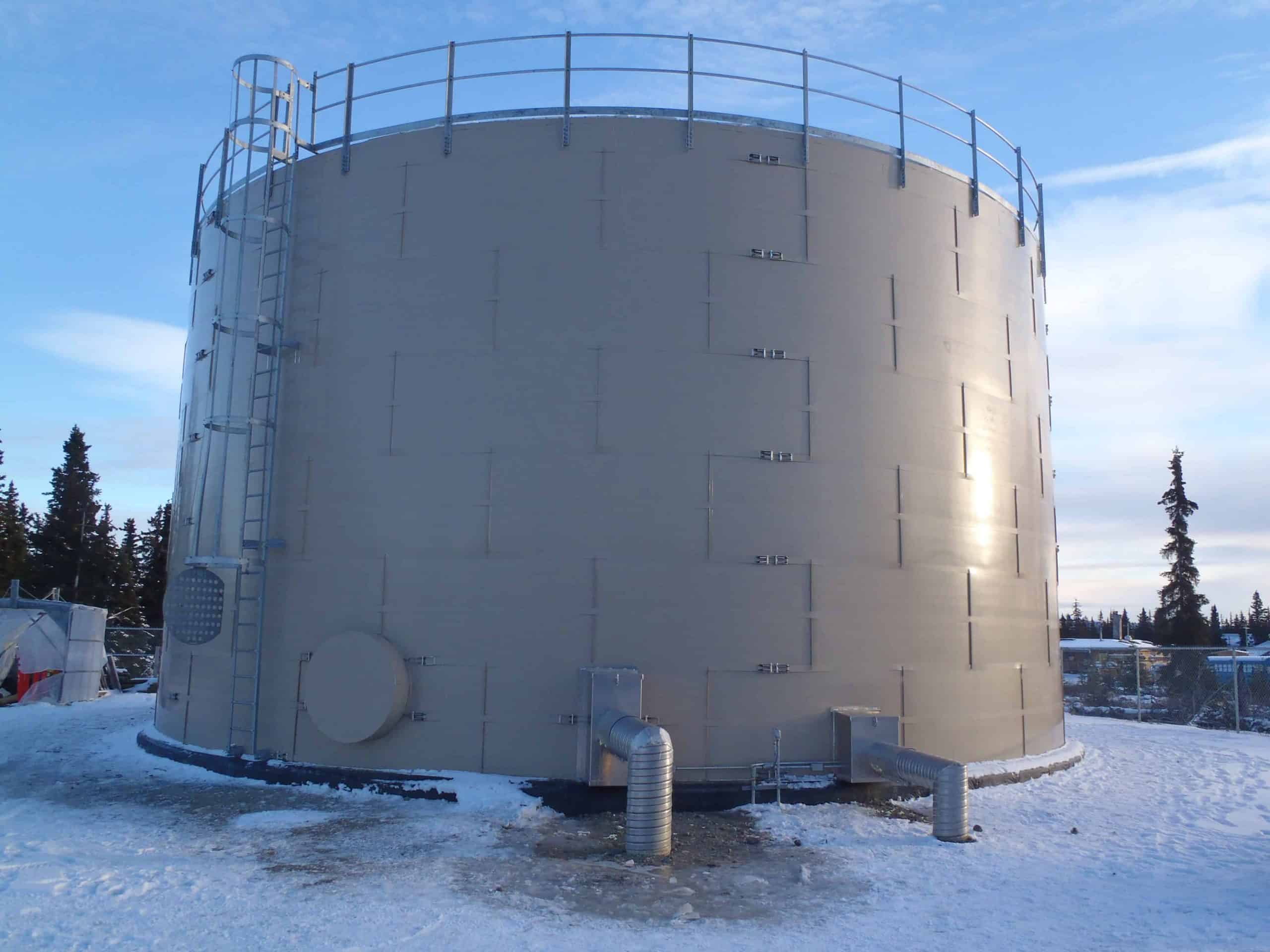
The window between winter and summer is the most valuable maintenance period you have. Cold winters are hard on insulation systems — freeze-thaw cycling causes expansion and contraction that weakens panel connections, compromises vapor barriers, and creates gaps that didn’t exist in October. By the time the heat arrives, those gaps are already working against you.
Scheduling a thorough inspection in late spring gives you time to identify what broke down over winter and address it before peak demand hits. Waiting until August to investigate why energy costs jumped is a costly pattern, and it’s one of the most common ones we see at industrial facilities.
Summer Equipment Preparation: What a Pre-Season Inspection Actually Covers
A pre-summer inspection of your industrial storage tanks isn’t just a visual walkthrough. It’s a systematic check of every component that affects thermal performance — and in a climate with cold winters and humid summers, that list is longer than most facility managers expect.
Start with the vapor barrier. High summer humidity, especially at coastal sites, creates real condensation risk on inadequately insulated tanks. When a vapor barrier fails — even partially — moisture gets in. From there it’s a short road to corrosion, mold, and insulation that looks intact from the outside but has lost most of its effectiveness. This kind of damage is invisible until it becomes expensive.
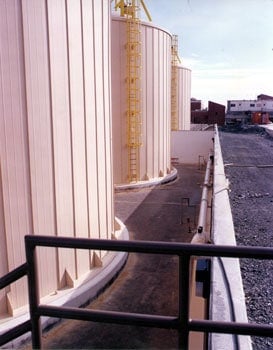
Next, check the insulation panels themselves. Look for visible deformation, separation at seams, or areas where the panel is no longer sitting flush against the tank surface. Winter’s freeze-thaw cycles are particularly hard on horizontal panel systems. Vertical panels tend to hold up better against moisture intrusion, but they still need inspection after a full winter season.
Examine the fastening and tensioning hardware. Pre-engineered systems that use tensioned band assemblies — rather than welded attachments — are designed to accommodate the expansion and contraction that comes with temperature swings. But the hardware still needs to be checked and adjusted seasonally. If you’re working with a system that used welded attachments, that’s a different conversation, and it’s worth having before summer stress exposes the weak points.
Finally, review your roof system if your tank has one. A properly engineered tank roofing system is designed to move independently from the tank structure, accommodating temperature-driven shifts without cracking or separating. If yours isn’t doing that — if it’s rigid, poorly fitted, or was built from repurposed building materials rather than purpose-engineered components — it’s worth getting eyes on it before summer storm season arrives.
How Summer Heat and Humidity Create Specific Risks for Storage Tanks
Most facility operators think about insulation as a winter concern. Keep the cold out, prevent freezing, maintain temperature in cold storage. That logic makes sense, but it’s only half the picture.
In summer, the problem reverses. Uninsulated or degraded-insulation tanks absorb ambient heat, which means stored products fluctuate in temperature, refrigeration systems work harder to compensate, and energy consumption climbs — often without any obvious explanation. Proper insulation can reduce heat transfer through a tank’s surface by 80 to 90 percent compared to a degraded or uninsulated system. At industrial scale, that’s not a minor efficiency gain. That’s a material line item on your energy bill.
Humidity adds another layer. At coastal and humid sites, summer air carries significant moisture. When warm, humid air contacts a cooler tank surface — especially one where insulation has thinned or the vapor barrier has failed — you get condensation. Persistent condensation leads to corrosion on the tank shell, which shortens the tank’s service life and creates contamination risk for whatever’s stored inside.
There’s also a longer-term trend worth noting. In many regions, summers are trending hotter. That means the thermal load on your storage systems isn’t staying where it is today. Insulation systems that were adequate five years ago may not be adequate five years from now. Pre-season maintenance isn’t just about this summer — it’s about making sure your systems are built for what’s coming.
Tank Maintenance Checklist for Hot Weather Conditions
Once you’ve completed your pre-season inspection, the next step is putting a repeatable maintenance schedule in place for the summer months. Industrial storage tanks in active operation don’t stay in a fixed condition — thermal cycling, humidity fluctuation, and operational pressure all affect system performance over time.
A good summer maintenance routine doesn’t have to be complicated. It needs to be consistent. The goal is catching small problems before they become large ones, and making sure your insulation system is actually performing the function it was installed to perform.
What to Monitor on Industrial Storage Tanks During Peak Summer Temperatures
During the hottest months, there are a handful of indicators that tell you whether your insulation system is holding up. None of them require specialized equipment — they just require someone paying attention on a regular basis.
Watch for surface temperature irregularities. If one section of a tank feels noticeably warmer to the touch than adjacent sections, that’s a sign that insulation has degraded or separated in that area. Heat is getting through where it shouldn’t be. This kind of localized failure is easy to miss on a casual walkthrough but shows up clearly if you’re specifically looking for it.
Watch for moisture at panel seams or at the base of the insulation system. Some surface condensation is expected in humid conditions, but persistent moisture accumulation — especially if it’s tracking down the tank wall — points to a vapor barrier issue. Left unaddressed, it accelerates corrosion and can compromise the structural integrity of the insulation assembly.
Monitor your energy consumption against baseline. If your refrigeration system or heating system is working harder than it did at the same time last year — without a corresponding change in stored volume or product type — insulation performance is the first place to look. The relationship between insulation condition and energy cost is direct. When insulation degrades, energy consumption goes up.
For facilities that operate fire protection water storage tanks, summer maintenance also means staying current with NFPA 22 and NFPA 25 requirements. Local fire marshals and other authorities having jurisdiction enforce these standards, and inspection failures aren’t just a compliance headache — they can affect your facility’s operational status. Keeping insulation systems in documented, inspected condition is part of maintaining a defensible compliance record.
Energy Efficiency Optimization for Industrial Tanks During Summer
Energy efficiency during peak summer months isn’t just about insulation condition — it’s about whether your insulation system was designed correctly for your tank’s specific operating requirements in the first place.
Generic insulation solutions create generic results. A system that wasn’t engineered to match your tank’s radius, operating temperature range, and stored product type will underperform, regardless of how well it’s maintained. Pre-engineered systems built to the specific geometry of your tank — with factory-curved panels that sit flush against the surface — eliminate the gaps and air pockets that allow heat transfer to occur. That precision fit is what makes the difference between a system that reduces heat transfer by 80 percent and one that reduces it by 40 percent.
For cold storage tanks operating between 24°F and 40°F, summer is the highest-demand season for thermal energy management. The ambient heat differential is at its widest, which means any weakness in the insulation system is amplified. Double-layer insulation systems are worth considering for tanks that store temperature-sensitive products, particularly at facilities that run continuous shifts.
For petrochemical storage, summer heat also affects product volatility. Proper insulation limits temperature fluctuation in stored materials, which reduces evaporative loss and the associated safety and regulatory concerns. This isn’t just an efficiency argument — it’s a safety one.
The broader point is this: insulation systems that were designed with your specific operating conditions in mind, installed without welded attachments, and inspected on a seasonal schedule will consistently outperform systems that were installed once and never revisited. Summer is when the gap between those two approaches becomes most visible — and most costly.
What Industrial Facilities Should Do Before Summer Fully Arrives
The pattern is predictable: facilities that schedule pre-summer inspections catch problems while they’re still manageable. Facilities that don’t end up troubleshooting in August, in the middle of peak operations, with fewer options and higher urgency.
If your storage tanks went through a full winter without a post-season inspection, that’s the first thing worth addressing. Check your vapor barriers, examine your panel seams, review your energy consumption trends, and confirm your compliance documentation is current.
If you’re not sure where to start, or if you’re dealing with a tank configuration that doesn’t fit a standard maintenance checklist, we’ve been working through exactly these kinds of problems since 1971. Reach out — the conversation is worth having before the heat does it for you.